Pages

Showing posts with label self-reliance. Show all posts

Friday, February 26, 2016

Pasty Butt - Chickens

Pasty butt is a condition in chickens where some of their feces becomes stuck and clogs their cloacas. This is a life threatening issue if not resolved quickly.

I just noticed that one of our new ladies may have pasty butt. I took a Q-tip and warm water and tried to clean it. It looks like the vent is clean, but I cannot get the dried feces off of her . After cleaning her with a Q-Tip, I rubbed some olive oil on it to try to soften the poop.


After some searching on Backyard Chickens and Facebook chicken forums and a quick soak in warm water, she's now OK.

If you encounter this issue with your chickens, make sure that you thoroughly dry them off before returning them to their flock. If not, they will get picked on by the others.


New Additions To Our Flock!

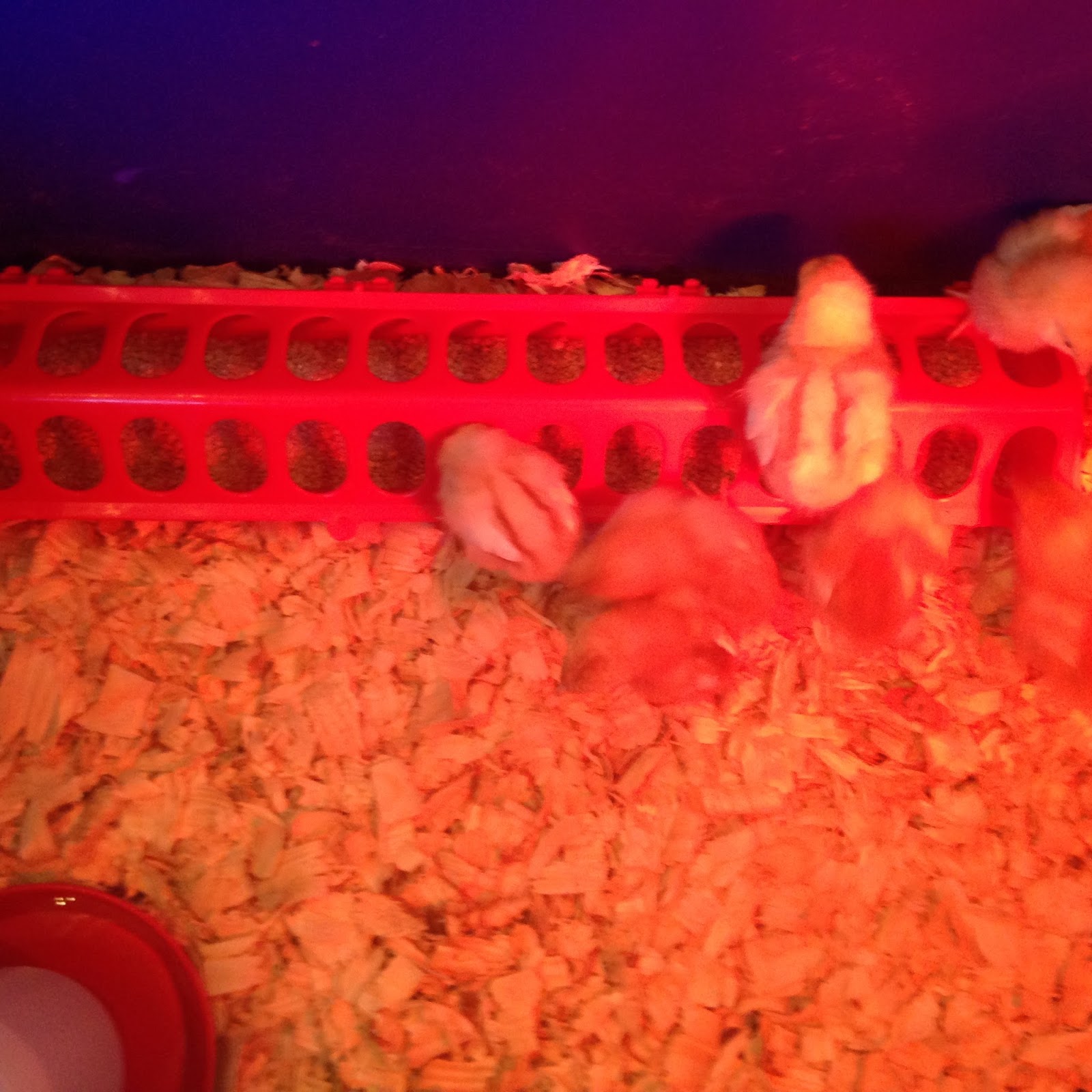
We just purchased 8 new pullets to replace what was left of our aging flock of Ameraucanas. The new additions to our household has also brought a great deal of joy to our family.

Right now they are pretty content.


Thursday, July 30, 2015

Book Finds - Peterson's Guide

With the upcoming Certified Tennessee Naturalist program that I am going to be going through, some of the tools of the trade that I am going to need including some Peterson's Guides.

While I am out at library sales and at Goodwill, I am constantly on the lookout for books that will be a good addition to my homesteading/naturalist library and ones that will benefit for me in my quest to live a self-sufficient lifestyle.

While at a library sale, I came across this book, which I was able to purchase for .50! While this book was published in 1951 and is is not the most recent edition of the guide, it is a very neat addition to the library, none-the-less!

Always stop and look through older books. You never know what you are going to find!

Sunday, April 19, 2015

Prepper's Financial Guide - BOOK REVIEW

I recently received a copy of Prepper's Financial Guide: Strategies to Invest, Stockpile and Build Security for Today and The Post-Collapse Marketplace by Jim Cobb. This book was provided to me by the publisher for my consideration, objective thoughts and opinions.

I can honesty say that I’ve never heard of an entire book that looks at prepping financially… until now. The Prepper’s Financial Guide has great information for anyone with any concerns about their financial future whether it’s in our current economy or in the aftermath of a financial collapse.  The book covers practical topics, listed with pros and cons with well thought out steps that anyone can implement.

Jim Cobb starts off this book with a great history lesson of hard economic times from around the world, explained in easy to understand sections. While I knew of the situations that were discussed, I learned that I didn’t know what I thought that I knew. I now understand the causes for the individual crisis as well
as their interdependencies.

Next, the book gives some practical advice for reducing debt as well as making and saving money. Following this, currency then precious metals and minerals and how to reliably obtain them are explained in easy-to-understand detail.

Midway through the book, Mr. Cobb discusses the popular topic of barter and trade with some common and out-of-the-box ideas as well as necessary skills to have so that you will be able to have recurring income. Following this, the author discusses various ways, including pros and cons of safeguarding your wealth

The best thing that I liked about this book in addition to the main topic mentioned is the author’s encouragement during the entire journey towards financial preparedness. Jim Cobb lays out practical, easy-to-follow strategies that will result in a lifestyle change for the better that will yield great results for the reader, even in the event that we never see a financial collapse.

Wednesday, June 11, 2014

The Prepper's Complete Book of Disaster Readiness - BOOK REVIEW

I recently received a copy of The Prepper's Complete Book of Disaster Readiness by Jim Cobb. This book was provided to me by the publisher for my consideration, objective thoughts and opinions.

This is the third book that I've read by the author and have to say that I really enjoy his down to Earth writing style as well as the wealth of information that he freely shares. In reading this book, there are a few chapters that jump out at me.

The book opens with the practical question of, "Why should we prepare?" as it discusses  That question is asked in Chapter 1 as it discusses short, medium and long-term emergencies. In thinking about emergencies, being able to do your part is essential so that you don't have to rely on others, which in turn frees up resources to help other people. It also, and for me more importantly, makes sure that you and your family are properly taken care of. Remember, you are your best advocate!

The book gives us insight and practical advice as to what it takes to develop the survival mindset as well as covers the similarities and differences between survivalists and preppers. This is perhaps the most important "thing" to have.. the mindset and will to survive.

There is also some great information on bugging out vs sheltering in place including very good information on properly caching supplies as well as having backup plans and backups to your backups. Also discussed is the almost always overlooked topic of a planning and packing for a delayed bug out when you have a bit of advanced notice ahead of your departure time. There are also several realistic scenarios provided to help you think through your plans. What I really liked about this chapter was the well-thought out caching information. I also liked the scenarios, which were all realistic, in that there were no brain-eating zombies running around. They were simply some of the most probable likely scenarios to occur.

Chapter Five talks about pantry organization and storage. There's lots of good, solid advice here to both get started and to take your food storage to the next level. Information such as what to store and what not to store abounds as does information on the preparation of food in general. My favorite unexpected take-away of the chapter was the cool use of the oft-overlooked plastic food storage bag.

When I first saw the title of Chapter Six, Foraging, I was very interested as that is something that I am getting more and more involved in.  This chapter covers foraging, in my definition of wild edibles, but also included in this chapter are also discussions on gardening and a straight-forward clarification of the difference between scavenging and looting. While it's impossible to fully provide one with an education on wild edibles as that would take a book on it's own, Mr. Cobb hits the highlights on several widely available plants that the reader can research.  The chapter also touches on some areas that I wouldn't normally think of when I think about foraging. The item that I really liked the most about this chapter is how the author stresses that planning to do something or even reading about doing something is not enough and is not the same thing as getting out there and doing it.

Security is talked about very well in another chapter. As one who has read some of Mr.Cobb's other works on the subject, I feel that he has his finger on the pulse of prepper security with this chapter. It covers topics such as cognitive dissonance, situational awareness and operations security (OPSEC). Not only are these topics covered, but areas such as secured storage and practical defense are mentioned as well.

While the common topics of security, food storage and water are covered as would be expected in this book, there is also information on the care of children, pets and the elderly and the very different needs that they have. If you have any of these in your family, you need to read his information and advice.

Aside from the items listed above, one of the things that I liked most about this book is the down to Earth way of looking at prepping topics from different angles. The solid, practical advice offered and the encouragement to practice your prepping will help make you a more prepared person.

From mindset to the essentials, Mr. Cobb is a very knowledgeable and thoughtful writer who covers prepping topics that are most often not considered by others. He will take you from making the plan to implementing the plan in a wide variety of prepping areas that will make the reader a better prepper.

Saturday, May 31, 2014

Thrift Store Finds - Keep Looking


Earlier this week, I had the chance to go to one of my favorite places to look for great homesteading deals. the local Goodwill Store.

Although nothing is guaranteed, I have found some great deals on clothes, books, oil lamps and cast iron cookware.

On this recent visit, I came across a copy of The Boy Scout Handbook marked at $1.99. This book is a treasure trove of great information and I've been looking for a copy for a long time. Yes, I could go and buy it, but part of trying to live simply is coming up with less expensive ways to obtain the items that you need.

To make this even better, the book was tagged with a green price tag. For those that don't know, Goodwill  offers 1/2 price off every Wednesyday for items that are priced with their color of week.

This weeks color was green, which means that the book that I found for $1.99 was only .99!

Sunday, April 13, 2014

Prepper's Long-Term Survival Guide - BOOK REVIEW

The Prepper's Long-Term Survival Guide by Jim Cobb is a book that I greatly anticipated reading.

In reading this book, I love the way that each chapter begins with the concept that the reader is currently dealing with a long term situation that coincides with the theme of the chapter. That opening in each chapter helps with the mindset needed to deal with the information that follows.

Chapter 1 begins with some events from history and then lays out several probable, potential scenarios that could occur in modern times from pandemics to economic collapse. The case is cogently laid out that whatever your concern, that right now is the time to plan for whatever it is that concerns you.

Chapter 2 deals with the topic of water. The human body can survive roughly three days without water after which our bodies start to shut down. From water procurement to filtration and proper storage, this chapter deals with all of the aspects of this precious resource.

Chapter 3 talks about food and what types of food to store. While this book is not the place for in-depth conversations about hunting, fishing and trapping, those topics are also touched on and provide some food for thought. Food preservation techniques are also talked about, including how to make a small root cellar-like storage area to keep food cool. The chapter ends with the topic of cooking and includes a section on making a simple solar oven.

Chapter 4 is the medical chapter. It talks about training and medicine and includes a comprehensive listing of a medical bag. It wraps up with some great information of common natural remedies.

Chapter 5 goes into hygiene which is an oft overlooked area of prepping. This chapter speaks about topics from proper human waste disposal to bathing to garbage disposal. While not too pleasant, it is an important area for which to prepare.

Chapter 6 discusses clothing and the proper items needed for the tasks that will most probably be done in a post-collapse environment. The fact that one will be spending more time outdoors than he/she probably does now figures into the important considerations of this chapter. Later on, the chapter discusses shelter and the importance of it as well as various common sense ways of keeping warm and cool.

Chapter 7 covers security, including structures and weapons as tools as well as a description of the mindsets that one needs to adequately provide for the protection of a yourself and your family.

Chapter 8 talks about tools of all kinds that will be needed in a world of an extended crisis. Tools for basic repairs, tools for gardens and tools for various jobs around the house and property are covered. Overlooked topics such as protective safety gear and communications are also discussed.

Chapter 9 deals with a topic that I admittedly have not heard a lot about when reading or talking about preparedness… entertainment. After the initial realization of what is happening regarding the crisis sets in, people will be spending time performing manual labor and other duties, but there will still be periods of down time.

Chapter 10 examines well thought out bartering parameters for items and services as well as potential post-collapse professions.

Chapter 11 discussed the importance of communities and community planning. A lot of people think that the lone-wolf approach to survival is the way to go, but this drastically overlooks the necessity of having others and the diversity of skills and resources that that brings. This chapter also covers very practical ways for dealing with refugees.

Chapter 12 ends the book on a high note, that is the hope that being prepared can provide. It is a pleasant change from the doom and gloom that is often portrayed by some preppers.

At the very end of the book, there is a pretty complete checklist as well as a suggested reading section for the beginnings of your own survival library.

The depth of information that is covered in this book is incredible as is the unique way that the author makes us really think about ideas, situations and resources that are mostly overlooked in the usual short-term survival planning resources. All that being said, this book belongs in the hands of anyone who is concerned with a long-term disruption in society as we know it today. It's practical, common sense approach makes it a valuable asset to all those who wish to not only be prepared, but for those who want to thrive.

Most prepper books provide you with the fundamentals and tell you what it takes to make it through a temporary crisis, be it a hurricane, tornado or ice storm. What happens, though, when the crisis lasts longer? What will happen in the event of a pandemic or economic downturn? This book fills a much needed information gap in the prepper community for a resource that deals with the long-term events of a disaster that lasts beyond the first 72 hours.

Tuesday, January 7, 2014

Proper Preparedness Pays Off

Today is January 7, 2014 and it's 0° on our back porch. Our phone Internet and cable TV are out, which is not a really bad thin, since it gives one other (more important) things to do.

This was the second in what has been a small series of events to test our preparednessss. It's the first event that I would like to address.

Last night we had company (our oldest daughter's boyfriend). With no warning, our power went off. Immediately, the kids sprang into action. With the whole house in darkness, someone grabbed an emergency flashlight that was illuminating the kids hallway. After making sure that everyone was OK and accounted for, I went to grab the flashlight in my hallway as our youngest boy was on his way to get our "Lights Out Kit". Our oldest daughter took her little sister (who was scared) to be with my wife in our room.

We broke out out "Lights Out Kit", which is essentially a Wal-Mart tote, labeled and kept in a location that everyone in the family knows.

Inside the kit are flashlights, candles, batteries, matches, lighters, extension cords, light sticks, electronic camping lanterns, and several battery powered radios with AM/FM, weather and shortwave frequencies.

We then distributed flashlights to all of the people in the house and got our oil lamps from a hutch in the dining room, lit them, placed them in the living room, where there was also a fire going. We then had a quick family meeting laying down our action plan which was who was going to do what along with some safety procedures such as no one goes outside without a partner, etc. Following this, two of us went (cautiously) outside to size up the extent of the problem, which looked to be impacting our entire neighborhood.

After all that, we broke out our Family Disaster binder, which among other things has the contact information for the electric company. We called the electric company to report the outage and with noting left to do, my youngest son and I went outside to check our "light discipline" to see how much light was "leaking" from the house. This is not a big problem in this situation, but in a larger one, having the only house with some form of lighting may make one a target.

After rejoining the others in the living room, we broke out a game called Apples to Apples and played until the lights came on.

Our daughter's boyfriend was eager to help the whole time, but there was really nothing else to do. As we were going through the outage, I explained to him what we were doing, what the kit was, what our Preparedness Plan was, etc. so he would be aware and maybe be able to bring back some information and preparedness planning to his family.

Lessons learned:
  • We need more emergency flashlights (the ones that come on in a power outage) around the house. We used to have more, but they were never replaced as they died.
  • We need more lamp oil and wicks. Although we were fine and do have some spares, thoughts go though ones mind about what would happen in a much longer outage.
  • Having others witness your plan during an event is a great way to positively spread the message of preparedness.
  • When you step up to lead in an emergency, other see that you know what to do and will follow the plan.
I hope reading this helps you to think more about preparedness!