Pages

Showing posts with label simpler times. Show all posts

Saturday, March 5, 2016

Great Article in Mother Earth News about Living Off-Grid In Nature

For my off-grid friends (and those looking to get there), I just came across a wonderful article in Mother Earth News.

The beauty and simplicity of life that it describes is worth the read! The text of the articles follows:


When Sue McKay Miller was 48, she quit her job as a geophysicist in Calgary, Alberta, and moved to a yurt on a 130-acre chunk of wilderness on Cape Breton Island, Nova Scotia. She took a radical approach to simplifying, divesting herself of most possessions while she figured out what “back to the basics” really means for her. 

“I knew that if I hooked up to the grid and started with all the mod-cons, I'd be unlikely to give anything up,” Sue explains. “So I decided to go at it the other way around: start out off-grid with only the bare necessities and discover what I really needed or missed and what I could easily do without. So, after over five years of 'camping out' (albeit in a large, luxurious tent!), what have I learned? I love the simple life!”

Despite being battered by gale-force winds, deluged by rain and half-buried in snow, Sue’s yurt has provided what she needs to live simply, without indoor plumbing, for more than five years. She heats with wood and lights up long winter nights with kerosene lamps and candles. When the deep snow arrives, she dons snowshoes and hauls goods up the quarter-mile driveway in an old fish crate. The wood-burning stove provides heat for cooking, washing, drying damp wood and socks, and living. “On frigid winter mornings I haul my rocking chair in front of the open oven, sip on coffee kept warm on the stovetop and write (with pen and paper, no less!) in my journal,” Sue says.

Sue’s life unfolds naturally in step with the seasons. In winter she makes stews and casseroles on the wood stove as it heats her yurt. In summer, she keeps the stove off and eats salads and raw foods. As summer nights cool down, campfires provide a fine alternative to TV and computer screens. “There is one power hog I really miss—a refrigerator!” Sue says. In winter, she places frozen gallon water jugs into a picnic cooler that she keeps in a cool spot inside. Summer's a challenge. “Perishables perish all too quickly—and an iced drink or a chilled beer would be most welcome on a hot day!”

She charges her cell phone, runs her laptop and powers a radio/CD player using a 30-watt solar PV panel and a 12-volt battery/inverter. This modest set-up provides ample power in the summer but barely enough to keep a single battery charged during short, sunless winter days. All too often, Sue runs out of power just as she’s deeply involved in writing on her laptop. She’s considering upgrades, and down the road she hopes to build a small open-plan cabin with indoor plumbing, a gravity-feed water system and underground cold-food storage. But she doesn’t want to overdo it.

“Very often I hear off-grid folks declare that 'we haven't changed our lifestyle one bit!' They buy a humungous [sic] number of solar PV and water-heating panels and maybe a windmill and large banks of batteries to run the vast array of appliances and electronic devices common to modern life,” she says. “Well, that's fine, and maybe a good option for some people, but is simply unaffordable for many of us.”

Besides, Sue loves her small, one-room home. “I like the simplicity of stove, pot and kettle rather than a wide array of specialized appliances, each with a digital clock blinking hurry! hurry! hurry! at me all the time,” she says. “Once I blow out my bedside candle, the only light is from the moon and stars. And my home is so quiet! No fridge whirring on and off, no water pump clunking, no forced air furnace roaring. That frees up my ears to enjoy nature's music—wind and water, birds and coyotes, frogs and toads (country life is seldom quiet). There is no TV or internet here, and that's mostly a good thing—I'm apt to be easily sidetracked and find it easier to focus without these distractions. However, I'm quite happy to be distracted by MNTV (Mother Nature TV), which may feature silvered clouds waltzing around a full moon, a pair of foxes courting on the frozen pond, or a moose family meandering around the pond and sampling nature's buffet. I live amongst great natural wealth and diversity, and I believe being off-grid greatly enhances my appreciation of it all.”

Friday, February 26, 2016

Pasty Butt - Chickens

Pasty butt is a condition in chickens where some of their feces becomes stuck and clogs their cloacas. This is a life threatening issue if not resolved quickly.

I just noticed that one of our new ladies may have pasty butt. I took a Q-tip and warm water and tried to clean it. It looks like the vent is clean, but I cannot get the dried feces off of her . After cleaning her with a Q-Tip, I rubbed some olive oil on it to try to soften the poop.


After some searching on Backyard Chickens and Facebook chicken forums and a quick soak in warm water, she's now OK.

If you encounter this issue with your chickens, make sure that you thoroughly dry them off before returning them to their flock. If not, they will get picked on by the others.


New Additions To Our Flock!

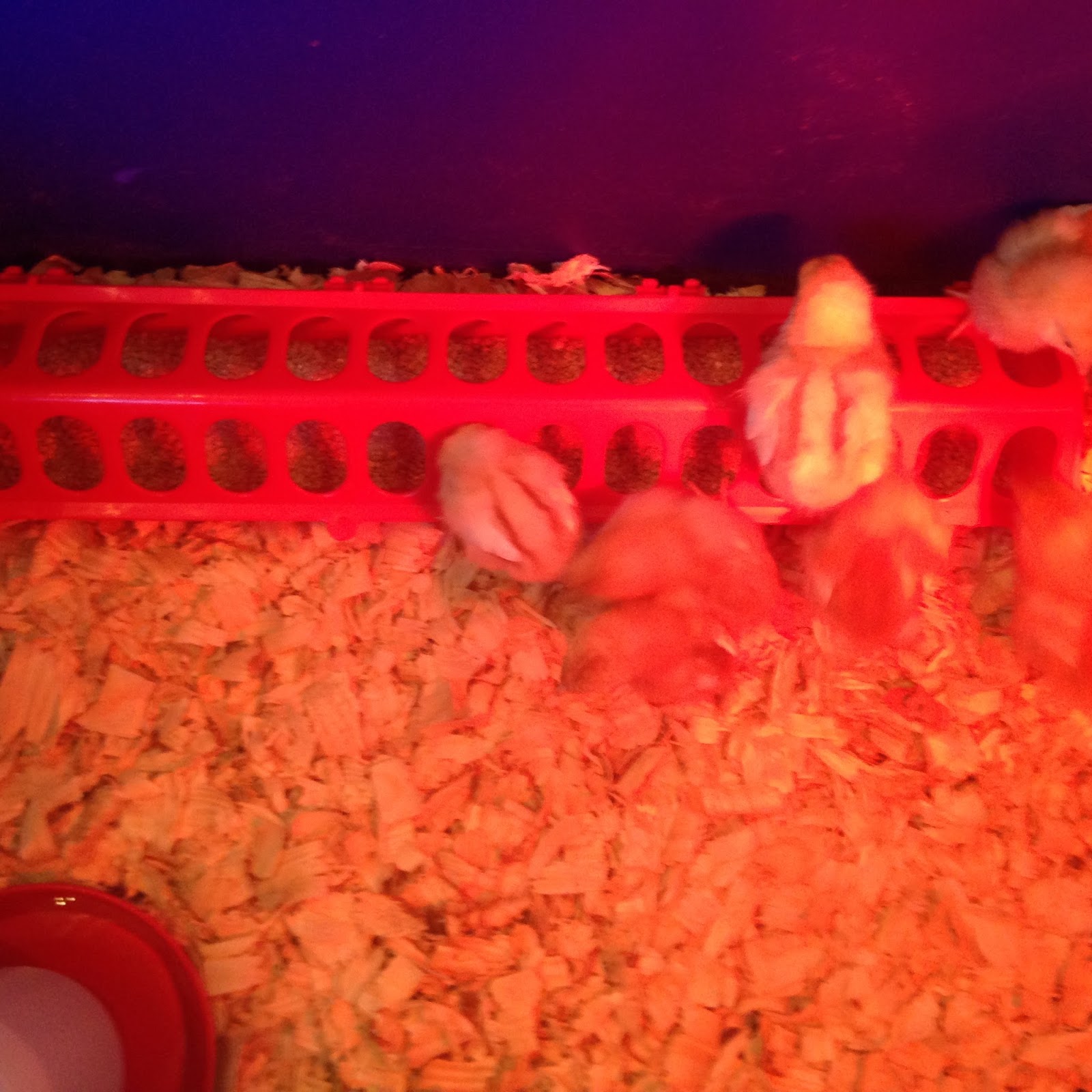
We just purchased 8 new pullets to replace what was left of our aging flock of Ameraucanas. The new additions to our household has also brought a great deal of joy to our family.

Right now they are pretty content.


Sunday, September 20, 2015

A Good Story

I understand that corn can't pollinate that far away, but it's a good story none-the less!

There was a farmer who grew excellent quality corn. Every year he won the award for the best grown corn. One year a newspaper reporter interviewed him and learned something interesting about how he grew it. The reporter discovered that the farmer shared his seed corn with his neighbors. “How can you afford to share your best seed corn with your neighbors when they are entering corn in competition with yours each year?” the reporter asked.

“Why sir,” said the farmer, “Didn’t you know? The wind picks up pollen from the ripening corn and swirls it from field to field. If my neighbors grow inferior corn, cross-pollination will steadily degrade the quality of my corn. If I am to grow good corn, I must help my neighbors grow good corn.”
So is with our lives... Those who want to live meaningfully and well must help enrich the lives of others, for the value of a life is measured by the lives it touches. And those who choose to be happy must help others find happiness, for the welfare of each is bound up with the welfare of all...
 
-Call it power of collectivity...
-Call it a principle of success...
-Call it a law of life.
The fact is, none of us truly wins, until we all win!!

Wednesday, December 25, 2013

Old Fashioned Christmas - Author Unknown

Pa never had much compassion for the lazy or those who squandered their means and then never had enough for the necessities. But for those who were genuinely in need, his heart was as big as all outdoors. It was from him that I learned the greatest joy in life comes from giving, not from receiving.

It was Christmas Eve 1881. I was fifteen years old and feeling like the world had caved in on me because there just hadn't been enough money to buy me the rifle that I'd wanted so bad that year for Christmas.

We did the chores early that night for some reason. I just figured Pa wanted a little extra time so we could read in the Bible. So after supper was over I took my boots off and stretched out in front of the fireplace and waited for Pa to get down the old Bible. I was still feeling sorry for myself and, to be honest, I wasn't in much of a mood to read Scriptures. But Pa didn't get the Bible, instead he bundled up and went outside. I couldn't figure it out because we had already done all the chores. I didn't worry about it long though, I was too busy wallowing in self-pity.

Soon Pa came back in. It was a cold clear night out and there was ice in his beard. "Come on, Matt," he said. "Bundle up good, it's cold out tonight."

I was really upset then. Not only wasn't I getting the rifle for Christmas, now Pa was dragging me out in the cold, and for no earthly reason that I could see. We'd already done all the chores, and I couldn't think of anything else that needed doing, especially not on a night like this. But I knew Pa was not very patient at one dragging one's feet when he'd told them to do something, so I got up and put my boots back on and got my cap, coat, and mittens. Ma gave me a mysterious smile as I opened the door to leave the house. Something was up, but I didn't know what.

Outside, I became even more dismayed. There in front of the house was the work team, already hitched to the big sled. Whatever it was we were going to do wasn't going to be a short, quick, little job. I could tell. We never hitched up the big sled unless we were going to haul a big load. Pa was already up on the seat, reins in hand. I reluctantly climbed up beside him. The cold was already biting at me. I wasn't happy.

When I was on, Pa pulled the sled around the house and stopped in front of the woodshed. He got off and I followed. "I think we'll put on the high sideboards," he said. "Here, help me."

The high sideboards! It had been a bigger job than I wanted to do with just the low sideboards on, but whatever it was we were going to do would be a lot bigger with the high sideboards on.

When we had exchanged the sideboards Pa went into the woodshed and came out with an armload of wood---the wood I'd spent all summer hauling down from the mountain, and then all fall sawing into blocks and splitting. What was he doing? Finally I said something. "Pa," I asked, "what are you doing?" "

You been by the Widow Jensen's lately?" he asked.

The Widow Jensen lived about two miles down the road. Her husband had died a year or so before and left her with three children, the oldest being eight. Sure, I'd been by, but so what? "Yeah," I said, "why?"

"I rode by just today," Pa said. "Little Jakey was out digging around in the woodpile trying to find a few chips. They're out of wood, Matt." That was all he said and then he turned and went back into the woodshed for another armload of wood. I followed him.

We loaded the sled so high that I began to wonder if the horses would be able to pull it. Finally, Pa called a halt to our loading, then we went to the smoke house and Pa took down a big ham and a side of bacon. He handed them to me and told me to put them in the sled and wait. When he returned he was carrying a sack of flour over his right shoulder and a smaller sack of something in his left hand. "What's in the little sack?" I asked.

"Shoes. They're out of shoes. Little Jakey just had gunny sacks wrapped around his feet when he was out in the woodpile this morning. I got the children a little candy too. It just wouldn't be Christmas without a little candy."

We rode the two miles to Widow Jensen's pretty much in silence. I tried to think through what Pa was doing. We didn't have much by worldly standards. Of course, we did have a big woodpile, though most of what was left now was still in the form of logs that I would have to saw into blocks and split before we could use it. We also had meat and flour, so we could spare that, but I knew we didn't have any money, so why was Pa buying them shoes and candy? Really, why was he doing any of this? Widow Jensen had closer neighbors than us. It shouldn't have been our concern.

We came in from the blind side of the Jensen house and unloaded the wood as quietly as possible, then we took the meat and flour and shoes to the door. We knocked. The door opened a crack and a timid voice said, "Who is it?"

"Lucas Miles, Ma'am, and my son, Matt. Could we come in for a bit?"

Widow Jensen opened the door and let us in. She had a blanket wrapped around her shoulders. The children were wrapped in another and were sitting in front of the fireplace by a very small fire that hardly gave off any heat at all. Widow Jensen fumbled with a match and finally lit the lamp.

"We brought you a few things, Ma'am," Pa said and set down the sack of flour. I put the meat on the table. Then Pa handed her the sack that had the shoes in it. She opened it hesitantly and took the shoes out one pair at a time. There was a pair for her and one for each of the children---sturdy shoes, the best, shoes that would last. I watched her carefully. She bit her lower lip to keep it from trembling and then tears filled her eyes and started running down her cheeks. She looked up at Pa like she wanted to say something, but it wouldn't come out.

"We brought a load of wood too, Ma'am," Pa said, then he turned to me and said, "Matt, go bring enough in to last for awhile. Let's get that fire up to size and heat this place up."

I wasn't the same person when I went back out to bring in the wood. I had a big lump in my throat and, much as I hate to admit it, there were tears in my eyes too. In my mind I kept seeing those three kids huddled around the fireplace and their mother standing there with tears running down her cheeks and so much gratitude in her heart that she couldn't speak. My heart swelled within me and a joy filled my soul that I'd never known before. I had given at Christmas many times before, but never when it had made so much difference. I could see we were literally saving the lives of these people.

I soon had the fire blazing and everyone's spirits soared. The kids started giggling when Pa handed them each a piece of candy and Widow Jensen looked on with a smile that probably hadn't crossed her face for a long time. She finally turned to us. "God bless you," she said. "I know the Lord himself has sent you. The children and I have been praying that he would send one of his angels to spare us."

In spite of myself, the lump returned to my throat and the tears welled up in my eyes again. I'd never thought of Pa in those exact terms before, but after Widow Jensen mentioned it I could see that it was probably true. I was sure that a better man than Pa had never walked the earth. I started remembering all the times he had gone out of his way for Ma and me, and many others. The list seemed endless as I thought on it.

Pa insisted that everyone try on the shoes before we left. I was amazed when they all fit and I wondered how he had known what sizes to get. Then I guessed that if he was on an errand for the Lord that the Lord would make sure he got the right sizes.

Tears were running down Widow Jensen's face again when we stood up to leave. Pa took each of the kids in his big arms and gave them a hug. They clung to him and didn't want us to go. I could see that they missed their pa, and I was glad that I still had mine.

At the door Pa turned to Widow Jensen and said, "The Mrs. wanted me to invite you and the children over for Christmas dinner tomorrow. The turkey will be more than the three of us can eat, and a man can get cantankerous if he has to eat turkey for too many meals. We'll be by to get you about eleven. It'll be nice to have some little ones around again. Matt, here, hasn't been little for quite a spell." I was the youngest. My two older brothers and two older sisters were all married and had moved away.

Widow Jensen nodded and said, "Thank you, Brother Miles. I don't have to say, "'May the Lord bless you,' I know for certain that He will."

Out on the sled I felt a warmth that came from deep within and I didn't even notice the cold. When we had gone a ways, Pa turned to me and said, "Matt, I want you to know something. Your ma and me have been tucking a little money away here and there all year so we could buy that rifle for you, but we didn't have quite enough. Then yesterday a man who owed me a little money from years back came by to make things square. Your ma and me were real excited, thinking that now we could get you that rifle, and I started into town this morning to do just that. But on the way I saw little Jakey out scratching in the woodpile with his feet wrapped in those gunny sacks and I knew what I had to do. So, Son, I spent the money for shoes and a little candy for those children. I hope you understand."

I understood, and my eyes became wet with tears again. I understood very well, and I was so glad Pa had done it. Just then the rifle seemed very low on my list of priorities. Pa had given me a lot more. He had given me the look on Widow Jensen's face and the radiant smiles of her three children. For the rest of my life, whenever I saw any of the Jensens, or split a block of wood, I remembered, and remembering brought back that same joy I felt riding home beside Pa that night. Pa had given me much more than a rifle that night, he had given me the best Christmas of my life.

~ Author Unknown


Tuesday, December 24, 2013

The Filling Station

The old man sat in his gas station on a cold Christmas Eve. He hadn't been anywhere in years since his wife had passed away. He had no decorations, no tree, no lights.  It was just another day to him.  He didn't hate Christmas, just couldn't find a reason to celebrate.  There were no children in his life. His wife had gone.

He was sitting there looking at the snow that had been falling for the last hour and wondering what it was all about when the door opened and a homeless man stepped through.  Instead of throwing the man out, George, Old George as he was known by his customers, told the man to come and sit by the space heater and warmup.

"Thank you, but I don't mean to intrude," said the stranger. "I see you're busy.  I'll just go"

"Not without something hot in your belly," George turned and opened a wide mouth Thermos and handed it to the stranger. "It ain't much, but it's hot and tasty.  Stew.  Made it myself. When you're done there's coffee and it's fresh."

Just at that moment he heard the "ding" of the driveway bell. "Excuse me, be right back," George said.

There in the driveway was an old 53 Chevy.  Steam was rolling out of the front.  The driver was panicked.

"Mister can you help me!" said the driver with a deep Spanish accent. "My wife is with child and my car is broken."

George opened the hood.  It was bad.  The block looked cracked from the cold; the car was dead.  "You ain't going in this thing," George said as he turned away.

"But mister.  Please help...."The door of the office closed behind George as he went in.  George went to the office wall and got the keys to his old truck, and went back outside. He walked around the building and opened the garage, started the truck and drove it around to where the couple was waiting.

"Here, you can borrow my truck," he said.  "She ain't the best thing you ever looked at, but she runs real good."

George helped put the woman in the truck and watched as it sped off into the night.  George turned and walked back inside the office.

"Glad I loaned em the truck.  Their tires were shot too. That 'ol truck has brand new tires........"
George thought he was talking to the stranger, but the man had gone.  The thermos was on the desk, empty with a used coffee cup beside it.

"Well, at least he got something in his belly," George thought. George went back outside to see if the old Chevy would start. It cranked slowly, but it started. He pulled it into the garage where the truck had been.  He thought he would tinker with it for something to do.  Christmas Eve meant no customers. He discovered the block hadn't cracked, it was just the bottom hose on the radiator.

"Well, I can fix this," he said to himself.  So he put a new one on.  "Those tires ain't gonna get 'em through the winter either."  He took the snow treads off of his wife's old Lincoln. They were like new and he wasn't going to drive the car.

As he was working he heard a shot being fired.  He ran outside and beside a police car an officer lay on the cold ground. Bleeding from the left shoulder, the officer moaned, "Help me." George helped the officer inside as he remembered the training he had received in the Army as a medic.  He knew the wound needed attention.

"Pressure to stop the bleeding," he thought.  The laundry company had been there that morning and had left clean shop towels.  He used those and duct tape to bind the wound.

"Hey, they say duct tape can fix anything'," he said, trying to make the policeman feel at ease.  "Something for pain," George thought.  All he had was the pills he used for his back.  "These ought to work." He put some water in a cup and gave the policeman the pills.

"You hang in there.  I'm going to get you an ambulance." George said, but the phone was dead.  "Maybe I can get one of your buddies on that there talk box out in your police car."

He went out only to find that a bullet had gone into the dashboard destroying the two way radio.  He went back in to find the policeman sitting up.

"Thanks," said the officer.  "You could have left me there. The guy that shot me is still in the area."

George sat down beside him.  "I would never leave an injured man in the Army and I ain't gonna leave you." George pulled back the bandage to check for bleeding.  "Looks worse than what it is. Bullet passed right through 'ya.  Good thing it missed the important stuff though.  I think with time your gonna be right as rain."

George got up and poured a cup of coffee.  "How do you take it?" he asked.

"None for me," said the officer.

"Oh, yer gonna drink this.  Best in the city." Then George added: "Too bad I ain't got no donuts."

The officer laughed and winced at the same time.  The front door of the office flew open.  In burst a young
man with a gun.

"Give me all your cash!  Do it now!" the young man yelled. His hand was shaking and George could tell
that he had never done anything like this before.

"That's the guy that shot me!" exclaimed the officer.

"Son, why are you doing this?" asked George.  "You need to put the cannon away.  Somebody else might get hurt."

The young man was confused.  "Shut up old man, or I'll shoot you, too.  Now give me the cash!" The cop  was reaching for his gun.

"Put that thing away," George said to the cop.  "We got one too many in here now."

He turned his attention to the young man.  "Son, it's Christmas Eve.  If you need the money, well then, here.  It ain't much but it's all I got.  Now put that pee shooter away."

George pulled $150 out of his pocket and handed it to the young man, reaching for the barrel of the gun at the same time.  The young man released his grip on the gun, fell to his knees and began to cry.

"I'm not very good at this am I?  All I wanted was to buy something for my wife and son," he went on.  "I've lost my job. My rent is due.  My car got repossessed last week..."

George handed the gun to the cop.  "Son, we all get in a bit of squeeze now and then.  The road gets hard sometimes, but we make it through the best we can."

He got the young man to his feet, and sat him down on a chair across from the cop.  "Sometimes we do  stupid things." George handed the young man a cup of coffee.  "Being stupid is one of the things that makes us human.  Comin' in here with a gun ain't the answer.  Now sit there and get warm and we'll sort this thing out."

The young man had stopped crying.  He looked over to the cop. "Sorry I shot you.  It just went off.  I'm sorry officer."

"Shut up and drink your coffee." the cop said.

George could hear the sounds of sirens outside.  A police car and an ambulance skidded to a halt.  Two cops came through the door, guns drawn.

"Chuck!  You ok?" one of the cops asked the wounded officer.

"Not bad for a guy who took a bullet.  How did you find me?"

"GPS locator in the car.  Best thing since sliced bread.  Who did this?" the other cop asked as he approached the young man.

Chuck answered him, "I don't know.  The guy ran off into the dark.  Just dropped his gun and ran."

George and the young man both looked puzzled at each other. "That guy works here," the wounded cop continued.

"Yep," George said.  "Just hired him this morning. Boy lost his job."

The paramedics came in and loaded Chuck onto the stretcher. The young man leaned over the wounded cop and whispered, "Why?"

Chuck just said, "Merry Christmas, boy.  And you too, George, and thanks for everything."

"Well, looks like you got one doozy of a break there. That ought to solve some of your problems." George went into the back room and came out with a box.  He pulled out a ring box.

"Here you go.  Something for the little woman.  I don't think Martha would mind.  She said it would come in handy some day."

The young man looked inside to see the biggest diamond ring he ever saw.  "I can't take this," said the young man. "It means something to you."

"And now it means something to you," replied George. "I got my memories.  That's all I need."

George reached into the box again.  A toy airplane, a racing car and a little metal truck appeared next. They were toys that the oil company had left for him to sell.  "Here's something for that little man of yours."

The young man began to cry again as he handed back the $150 that the old man had handed him earlier.  "And what are you supposed to buy Christmas dinner with?  You keep that, too. Count it as part of your first week's pay." George said. "Now git home to your family."

The young man turned with tears streaming down his face. "I'll be here in the morning for work, if that job offer is still good."

"Nope.  I'm closed Christmas day," George said.  "See ya the day after."

George turned around to find that the stranger had returned. "Where'd you come from? I thought you left?"

"I have been here.  I have always been here," said the stranger. "You say you don't celebrate Christmas. Why?"

"Well, after my wife passed away I just couldn't see what all the bother was.  Puttin' up a tree and all seemed a waste of a good pine tree.  Bakin' cookies like I used to with Martha just wasn't the same by myself and  besides I was getting a little chubby."

The stranger put his hand on George's shoulder.  "But you do celebrate the holiday, George.  You gave me food and drink and warmed me when I was cold and hungry.  The woman with child will bear a son and he will become a great doctor.

The policeman you helped will go on to save 19 people from being killed by terrorists.  The young man who tried to rob you will become a rich man and share his wealth with many people.

That is the spirit of the season and you keep it as good as any man."

George was taken aback by all this stranger had said.  "And how do you know all this?" asked the old man.

"Trust me, George.  I have the inside track on this sort of thing.  And when your days are done you will be with Martha again."  The stranger moved toward the door.

"If you will excuse me, George, I have to go now.  I have to go home where there is a big celebration planned."

George watched as the man's old leather jacket and his torn pants turned into a white robe.  A golden light began to fill the room.

"You see, George, it's My birthday.  Merry Christmas."

~Author Unknown

Thursday, November 28, 2013

A Homesteader's View of Thanksgiving

Happy Thanksgiving!

The following is from Jack Spirko over at The Survival Podcast. The article was originally called "A Survivalist's View of Thanksgiving," but I feel that the running theme embodies the view of those who homestead as well. 

In this article, Jack goes through and debunks the myths that we commonly hear and think about Thanksgiving, but at the same time, gives us a good perspective that fits very well with homesteading. Although the talking points to this long article can be summarized in a few paragraphs, the article is quoted here in it's entirety as I believe that it has merit.

One, they didn't have mashed potatoes; they didn't grow potatoes in the northern colonies that first year. Number two they didn't have buckles. You know all those Pilgrims, little kids, buckles? The buckles didn't get in fashion until 1700s. No buckles. They were wearing black and white because they had the feast on a Sunday. And the Pilgrims wore black and white on Sundays; it was formal attire. They did not always run around in black and white while they were working in the fields, and hunting, and fishing, and farming. It's a myth. Women mostly wore colors like reds, greens, and tans. The men wore colors like tans, grays, greens, tweeds, beiges. So they weren't always running around in big top hats with buckles on and gaiters and things like that. Okay? So that's a myth—not a big myth.
 

Turkey they probably had. The original recorded journal entry of Thanksgiving says they shot as much fowl as they could. That would probably be a lot of ducks and geese that time in New England. Another belief is that they had this holiday the third week of November. They did not. It was somewhere between the end of September and beginning of October that they had the original Thanksgiving. If you've ever been to New England, you will know why.
 

Now here's the big myth that they had this first Thanksgiving feast and it immediately became a tradition. An original American tradition. And that every year thereafter they continued to have this holiday and that as the United States evolved and grew, wherever Americans went, wherever colonists went, the holiday went with them. That's not how it happened at all.
 

You see they didn't even have the feast the second year. Didn't happen a second year because the colony was ravaged with a lot of problems, diseases, and crop failures. And other colonists came and those other colonists didn't immediately pick up the holiday, but over time, as people began to settle, the United States, primarily initially in the northeastern United States, in the Virginia Colony, which ran from like the Hudson River area of New York down to what is Virginia. That whole thing was called Virginia Company.
 

And as that started to spread—and what I mean by spread is just that people started to spread out, started to set up actual, permanent places to live, building farms, starting to live normal lives, at least for the period and the time—the tradition of Thanksgiving, going back to that original meal began to be created. And people began to sit down at the end of the harvest season and sometimes there was some formality in certain regions and certain areas to we're going to do it on this day, or we're going to do it on that day. But there was no official holiday and there certainly was no colony-wide holiday. It was just something people did. And they did tell stories, and that's how the whole tradition of the original Pilgrims' and Indians' Thanksgiving got kept. It became part of history because people did tell that story by word of mouth.
 

And they would sit down at the end, once they had put everything away for the year, and finish making their winter preparations. And what does that remind you of? The ant and the grasshopper? Modern survivalism? That's exactly what it was, folks. That's exactly what Thanksgiving was in its origination. People would get ready for winter. They worked all spring, they worked hard all summer, they worked hard in the beginning of the fall. They put everything down in the root cellar; they did everything they possibly could. They went hunting, they went fishing, they stacked up the meat in the larder. They did everything they could to get ready because they knew, especially if you've ever experienced a winter in Connecticut, or New Jersey, or  Massachusetts, or Vermont, or New Hampshire, or Maine, or Upstate New York, then you understand what they were getting ready for. Brutal cold, short days. They didn't have greenhouses, folks. No ability to grow anything.
 

And even the game would get scarce by about December because it would be hard to find because it would go hole up somewhere to keep warm itself, and it would have to travel long distances, so wouldn't congregate anymore. So it'd be hard to even go out and harvest anything at that point. Besides, it was too damn cold. 

So hopefully they had enough wood chopped, they had enough food put in the larder, they had enough food in the root cellar. And remember, they didn't have refrigerators, freezers, electricity. But when they got everything is done as they could, they sat back, they came together, and they had a great, big meal.
 

I want you to think about something that most people will never, ever think about today. What they had done is put away enough that they hoped would be enough. And often people were quite hungry by the time the first days of spring started to come around. Sometimes a winter could go longer and it'd be later in the  season before you could plant crops. Sometimes you'd start your crops and you know what would happen, folks? A late frost would come in and put you back three, four, five weeks. That's a long time to go without food.
 

So you would think that after they put all this food away they would immediately begin rationing their food. This is how much we have today; this is how much we have tomorrow. We have to plan for the future. People that put that much planning and effort into preparing for winter, you'd think that's what they would do. And folks, it's the way they lived 99% of the time. Except for Thanksgiving.
 

On Thanksgiving, they covered the table with food. And it was—at times it was a three-day event; Thursday, Friday, and Saturday, and you went to church on Sunday. And they would have relatives, and friends, and anybody that didn't have a real close family to go be with would be invited into the home if they were a family friend. And food would be shared, and people would eat just like we do today until they couldn't move.
 

You know what that was? It was a Thanksgiving; it was also a reassurance that we're going to be okay. We've been good ants; we've worked hard enough. We're going to make it through the winter. We will be here to see spring. It's okay to enjoy the fruits of our labor and our efforts. It's okay to share with others. It's okay to be grateful for all that we have. It will be enough.
 

I sure wish that instead of just teaching our children in school about the Indians, and the Pilgrims, and the fake buckles, that maybe a little bit more of that was going into our education system. A little bit more of an understanding that when people 200 years ago, 300 years ago, sat around a table and ate that much food and shared with that many people at one time, that it wasn't like today where if you needed more food you went to Kroger, or you went to Publix, or you went to Winn-Dixie. If they're even still in business. I'm not sure. Albertsons or whoever. There wasn't anything like that. In many of the colonies, there wasn't even a lot of stores around of any kind or shape. You know?
 

It would be you'd have to get on a horse and ride for a day just to pick up a couple of sacks of grain for some extra provisions to make it through. And what if you had to do that in the winter because you ran out in the winter and the snow drifts were six feet high? That's how it was. We were still in the tail end of the Little Ice Age, folks, during the 1700s and 1800s. Early 1800s were cold. Long, cold winters, colder than you can imagine. But they had a feast. They had a feast and the main purpose of the feast, besides being thankful, was to reassure the family, to reassure everybody we're going to make it through winter. We're going to see spring.
 

It's an amazingly optimistic view of a holiday that many people that would like to go back and rewrite history have tried to tear down. But let me tell you a little bit more about Thanksgiving and why we should be thankful that there is a Thanksgiving today.
 

The first official declaration of Thanksgiving was by George Washington in 1789, but it was not made a national holiday until Abraham Lincoln did it in the middle of the Civil War. He was looking for a way to unify the nation, so he officially set a date of the third Thursday in November as Thanksgiving Day. After the Civil War was over, Thanksgiving was largely not celebrated in the entire southern United States. It was viewed as a damn Yankee holiday. And it was only over time as people began to relocate and the wounds between the states began to heal that the people of the South were willing to accept the holiday as an American holiday instead of a northern holiday.
 

Somebody tried to monkey with our holiday. His name was Franklin Delano Roosevelt. And I'm sorry. I think I said that Lincoln set the holiday for the third Thursday in November. It was the fourth Thursday in November, which it is today. If I made that mistake, I'm sorry. But it was Roosevelt who then moved it from the fourth Thursday to the third Thursday. Now why would somebody do that? Why would somebody mess with tradition?

What does everybody do on Friday after Thanksgiving? They go shopping. You'd like to believe that it was different during the Great Depression? It wasn't. People went shopping on Black Friday during the Great Depression. So Roosevelt thought if he moved Thanksgiving back a week, it would add one week to the Christmas shopping season and help spur the economy.


Eventually people got pissed off and complained about it and it got moved back where it is today, the fourth Thursday. That's how it became that day and that's how it was put back on that day. And that's how it's been ever since.
 

And I think one of the things we really need to understand about the spread of Thanksgiving through the United States is how it was commensurate with healing of the wounds between the states from the Civil War. And I think if you're 10 years younger than me, maybe my generation was the last to really see it for what it was. And I'm glad that it's gone, and I'm glad that it's dead, but I think we need to remember it so that we understand what a great nation we've actually formed today. Because sometimes I get real hard on our government, and I'll continue to do it, folks. You'll tune back in and you'll hear me tearing up a senator, or the president, or a chief justice for stepping on our Constitution. But overall, we have a pretty great country.
 

And what I remember when I was a child, very young child—I'm talking kindergarten, first, second grade—and I moved from Pennsylvania to Florida with my family. My grandfather and his friends in Pennsylvania would always tell me, "You're down them with them damn rebels." And the kids that I went to school with would sometimes call me a damn Yankee until I picked up that Florida accent. And it wasn't like it is today. 

I hear people call people Yankees today. And generally when you hear somebody call somebody a damn Yankee today, it's because you're putting them down for being a big government tax and spend liberal from Massachusetts or something like that. Or it's kind of like a Texas joke. Well, Yankees, where do they come from? They come from Oklahoma. Anything north of the Red River, you know that's the Mason-Dixon line in our opinion. But there's a joke and there's joviality to it.


I saw the last vestiges of the true animosity that was held over by my grandfather's generation and the generation before him that handed it down. I saw that. I saw it for what it was. You know? And I saw at the same time the last vestiges of true racism in this country where we were busing students for integration purposes and things like that and there was resistance to it. And all these other things. It was the tail end. It was the late '70s, early '80s. And that stuff's gone and behind us now.
 

But a lot of that healing, a lot of that unifying went right along with the spread of Thanksgiving as it slowly made its way through the United States. What I'm saying to you, folks, is in 1880 if you lived in South Georgia you didn't celebrate Thanksgiving at all. You didn't even notice. You didn't even care. If you had a kid in college up north, he'd write you a letter about it, you were like, "Yeah, you're with that damn Yankee holiday." And today, Thanksgiving is celebrated in all 50 states. And it's one of the first American traditions that's uniquely American, that legal immigrants, and even illegal immigrants—let me be fair—that come to our country adopt as one of their own. It is one of the most unifying things in America and it's why I get disgusted when people try to tear it down.

And on Thanksgiving Day we should not just get together and eat food and be thankful for the bounty in front of us. We should think of the other things that we're thankful for. So I ask you to pause today and just think what are you thankful for?
 

As you continue to prepare for the unknown future and try to make your life better, whether it gets bad or it doesn't, living the show credo as you continue to be an ant like those brave people before us that were  preppers and survivalists and didn't even know that that's what it was called. It was just living back then. Think about all the things that make your life easier. The fact that you can turn a switch and a light bulb will come on. The fact that if you're cold there's a little box on your wall that you can turn up and if you're hot you can turn it down. It will change the temperature of your home.

The fact that a person like me is free to get on the Internet and blast his government—and sometimes support it—and no one shows up at my house to take me away. That you're free to listen to it and no one shows up at your house and takes you away. That you're free to go to any church, temple, or synagogue that you want to worship God is your choice or you're free to not.
 

The freedom to do so and the freedom to not do so is something that long ago became uniquely American. It's prevalent in many places in the world today. But people often think of the Puritans and the Pilgrims being deeply religious. And they held their own community to deep religious standards, but they didn't try to force that onto other communities. They really didn't. It's a misnomer. They did try to spread it among the Indians, and that didn't work out real good, but you know nobody's perfect.
 

Think about how grateful you should be that you can walk up to a police officer in this nation and ask for help and get it because there's places where people so fear their police they would never go to a police officer for help.
 

Think about how grateful you are that despite the fact that our education system needs a massive overhaul, at least everybody learns how to read that wants to in this country. And that's true. No matter how bad you want to put down the education system, any kid that goes to our schools, any of them, even the crappiest one, that wants to learn to read, to write, and do basic math, they'll come out with that education. There's places in the world where you can't buy that education.
 

Be grateful for all that we have. And just remember that unique part of Thanksgiving that no one ever talks about that I talked to you earlier. Just remember that when people 200 years ago sat down to a massive banquet, it wasn't just patting themselves on the back. It wasn't just being thankful. It was we know winter's almost here. We know that the last days that the sun really is warm on our faces are almost over for a while. We know that we're going to go into a darkness, we know that we're going to into a time where there's not very much.
 

But we also are going to feast and we're not going to ration today, or tomorrow, or the next day. We're going to feast for three days because we know we'll see spring. And folks, there could be no better time than to think of that than today. Because today, our nation is headed for some very tough times. Our government has pumped $7 trillion of phony money into our economy. They've done it. There's no way to pull it back now. It's already happened. Right now we're seeing prices come down. Prices on everything will go up; they have to. You can't put $7 trillion into an economy without devaluing money. Can't be done.
 

We're going to go through some dark times but even while you're prepping, even while you're saving, even while you're preparing, I want you to stop not just on Thanksgiving, but every once in a while I want you to stop, I want you to gather around your family, your friends, people that don't have other people, I want you to sit down and I want you to feast. Doesn't always have to be with food, sometimes it can be with words, sometimes it can be with activities, but every once in a while I want you to just splurge on yourself with emotion, and even money, and certainly with food, and just enjoy it. And make it something special.
 

And make it part of remembering that even though you have to be smart about how you spend, you have to be smart about how you store, you have to be smart about how you work, how you save, that every once in a while you need to remind yourself that spring will come and that you're going to be there to see it.
 

That's really all I have for you today. This has been Jack Spirko with a Thanksgiving edition of The Survival Podcast, hoping that I've helped you figure out today how to live that better life if times get tough, or even if they don't.

I hope that you've enjoyed reading this article and that you have a Happy Thanksgiving!

Thursday, October 24, 2013

Around The Homestead - Prepping For The Hard Frost Tonight

Since Fall arrived, we've had aour share of colder than normal days. Today was 15° colder than normal. We're supposed to get our first real frost tonight. We've had some light frost which withered our grapes and what's left of our tomato and pepper plants.

Tonight the low is 29° for the town closest to us so it'll be 5-7 degrees colder here.

In order to prepare for the freeze, we dug our some old moving blankets that were given to us and wrapped our rain barrels with them, then secured them with bungee straps. The added insulation helped keep them from freezing last year (our first year with them). I originally thought that if they were full that they wouldn't freeze just do to the sheer amount of water, but have heard several stories of people whose water barrels froze partially, expanding and cracking them, so we didn't want to take any chances.

The second thing that we wanted to get done was to finish getting the remaining tomatoes and jalapeno peppers off of the plants.

Lastly, I stopped by the our chickens. Their feathers came in just in time and they were all fluffed and full. I removed their waterer for the night as it's an outside one and it's made of metal, so it'd definitely freeze.

Now all that's left to do is to make some fried green tomatoes or green tomato bread, which I have not tried, but it looks pretty good.

For those interested, here's how to make friend green tomatoes. Well, God made them, we just cook them.

  1. Slice tomatoes
  2. Dip in raw scrambled egg. 
  3. Then dip in flour seasoned with salt and pepper. 
  4. Some folks add a little heat like cayenne pepper.
  5. Fry in olive oil for best health and flavor, until brown and soft. 
Although I've never tried it, here is the recipe for Green Tomato Bread, if you'd like to try it.

Enjoy the weather and stay warm!


Tuesday, October 15, 2013

Homemade Bread

Some of the earliest memories that I have are of going down our family friend, Mamie's house. Mamie and her husband Jim lived a simple life. She cooked everything fresh from scratch and he hunted. I remember going out back and looking at all of the hunting dogs who always seemed to be incessantly barking.

Mamie used to sit with me on her front porch and tell me stories and share some old wives tales as well.

One of the things that I really liked was going over her house and smelling fresh homemade bread being baked with the scent filling the whole house and even drifting outside. Even going inside and seeing bread pans covered with dish clothes was enough to make my mouth water.

Since then, I've been hooked on homemade bread. The recipe below is not Mamie's recipe, but is a basic one for homemade white bread.

Ingredients:
  • ½ cup warm water
  • 1½ T yeast
  • 1 T sugar
  • 1 cup boiling water
  • ⅓ cup oil
  • ⅙ cup sugar
  • 2 t. salt
  • 1¼ cups cold water
  • 6½ cups flour


Instructions:


Step1

In a small bowl mix the ½ cup warm water, 1½ T yeast, and 1 T. sugar.

Let it sit for about 5 minutes or so.


Step 2


In a mixer or in another bowl mix the 1 cup of boiling water, ⅓ cup oil, ⅙ cup sugar, and 2 t salt.

Stir until it dissolves.


Step 3


Add in the cold water and mix and then add in the yeast mixture. (You want the mixture temp to be lukewarm before you add the yeast and thats why do you do this.)


Step 4


Add in 3 cups of flour and stir.
Let this mixture rise for 30 minutes.


Step 5


After 30 minutes, the mixture should have some bubbles from the yeast.

Add in 3 cups of flour. It should form a nice not sticky dough. Let this rest for about 30 minutes.


Step 6


Add in remaining 3 to 3½ cups of flour. It should form a nice not sticky dough.

Let this rest for about 30 minutes.


Step 7


Grease (with butter) and lightly flour the bread pans. This will help the bread to release from the pan and to come out easier.


Step 8


Separate dough into bread pans.

Cover with a dish towel and let these rise for about an hour (or until the dough has doubled in size) in a warm place.

Bake bread at 350°F for 35-40 minutes.


Step 9


Remove the loaves from the oven and brush the tops with butter.


Step 10


 Enjoy with butter or your favorite jam or jelly spread!


Sunday, October 13, 2013

Getting Started with Homesteading

I have come to find that one of the best things that we can do as homesteaders is to encourage those who have a similar mindset. I am still trying to escape the bonds of “the Great American Success Story” and return to a more simpler time and lifestyle of self-reliance and sufficiency, but want to encourage anyone who may read this.

There were some things that I thought about that really help get one started, which is the key. The journey, is the goal. I've found that is important to try to do something... anything on a daily basis that helps move you towards your goal of self-sufficiency. Some things to think about to get you started include:
not the destination really

Getting out of debt
Once this is tackled, a whole new word of opportunities open up and you have the funds to not only achieve your dreams, but help others as well.

Become more informed of the world events around you
In order to make a change in the world, even if it's your world, you have to be aware of what is happening. It may, according to what is happening in the world, or with the economy, make sense to make a more to a more rural location at a certain time over another.

Plan your work, then work your plan
Once you know what you want to do, purpose it in your heart to work a little more towards your goals every day, even if it's just planning or talking to others about being self-sufficient.

Learn new “old” skills (gardening, hunting, fishing, foraging, canning, sewing, etc.)
With the passing of each generation, I am firmly convinced that there are a lot of skills that simply vanish. I've heard it said over and over again, "My grandfather used to hunt," or "My grandmother used to sew." We've become so accustomed to being a microwave (I want it now) society that the "old ways" are simply not taught anymore.

Plant a garden
Do you know where your food comes from?... What's sprayed on them?... What genetic manipulation was done to the food?... What could be better than taking control of what you and your family eat to ensure that it is healthy, nutritious and grown with your own two hands?

Raise chickens
Similarly to the statement above. Do you know what is in the chicken that you buy at the grocery store?... What hormones are in it? Not to mention that chickens are a remarkable (and easy) animal to start of with.

Take personal responsibility
It seems like we (as a culture) have lost a sense of personal responsibility. There is always some excuse for mistakes that we made. People are always looking for someone, increasingly the government, to bail them out, give them food, provide a house, transportation, a cell phone, etc. There is little that is more rewarding than being the master of your own destiny, in a matter of speaking. God is the ultimate Master of us, but there is such incredible personal satisfaction in knowing and celebrating your accomplishments. Imagine, eating a meal provided by your garden and own animals in a house that you and your family built.

Learn how to store food
This goes hand-in-hand with growing your own. There are times of surplus. These are the times that you put back food either through canning, dehydrating, smoking or freezing to preserve it for future lean times. Having stored food also lets you be a blessing to others in need. A pastor once told me that we are blessed to be a blessing. How true that is!

Do something everyday, no matter how small, to further your goal
This goes along to what I've said a few times above. Do something, anything, everyday. You will not regret it and it will help to keep you focused on living the lifestyle that you want to live.

Friday, October 11, 2013

Homestead/Self-Sufficient Series - Alaska: The Last Frontier

I previously posted about watching some homestead/self-sufficient television shows in my sparse downtime and talked about a show called Mountain Men.

This time, I would like to discuss a show called, Alaska: The Last Frontier. For those who do not know, Alaska: The Last Frontier follows the adventures of the Kilcher family, Atz Lee Kilcher, Eivin Kilcher, Otto Kilcher, Atz Kilcher, Eve Kilcher, Jane Kilcher, Charlotte Kilcher at their homestead in Homer, Alaska.

The following is taken from Alaska: The Last Frontier's Facebook...

Alaska: The Last Frontier introduces viewers to the Kilcher family and their isolated community outside Homer, Alaska. The Kilchers have cultivated and lived on their homestead for generations. These men and women of the wild live off the land, spending the limited months of summer and fall gardening, hunting and fishing for food, gathering supplies from the land and preparing their animals' safety in preparation for surviving the harsh Alaskan winters. 


What can I say about the Kiltcher family? They are the real deal. Honest. Hardworking and well,... real. The new season is almost upon us, but in reflecting on the previous seasons, we see the struggles and triumphs that define a true frontier family.

For those interested in watching the show, this season just premiered on October 6th at 8PM CST

Tuesday, April 2, 2013

Game Trails Follow-up Video

Here is a short video that I just created that goes along with a previous post that I wrote on game trails.

I hope that this will serve to provide you with incentive to go and look for these wildlife signs in the wooded areas near you. Learning these will serve you well whether you are a game watcher or are looking to become a better hunter.


Thursday, March 28, 2013

Properly Butchering a Rabbit

Knowing how to properly butcher the game that you catch is important for several reasons, the least of which is so that you can make the most out of the resource that you've just harvested.

While we've butchered our share of deer, we've never butchered rabbits (yet :) )

Anyway, here is a good write up on butchering a rabbit, complete with pictures.I look forward to trying out this new found knowledge soon.

I hope that you enjoy it.

http://honest-food.net/2010/05/19/how-to-cut-up-a-rabbit/

Monday, March 25, 2013

Eustace Conway Video/Story


Many of you either know about or have recently heard about Eustace Conway, a mountain man recently featured on History Channel's series, Mountain Men. I have blogged about him before. You can read those posts, here.


It is simply a travesty what is being done to him and people need to spread to word about  what's going on in Triplett, North Carolina.

If you've not heard about the issues that Eustace is dealing with regarding government intrusion, I invite you to watch the video below.


https://www.youtube.com/watch?v=26MCtGBb-Uw&feature=youtu.be


Tuesday, February 19, 2013

Wood Kitchen Cook Stoves, part 3 - What are warming ovens? How do they work?

USE OF THE WARMING OVEN
Plates may be kept warm in the warming oven, but this is not all that may be done in it. Dried fruit, such as prunes, figs, and raisins, may be put to soak in water in the warming oven, left there for hours and hours, developing a richness and sweetness that cannot be otherwise produced.

One of the attributes of a good cook is a knack of serving hot dishes hot. This is not always easy when· there is considerable variety in the "menu." Here is where the warming oven may play an important part and cause the guests to wonder, "How she does it."

For example, a thick sirloin. If properly timed, it may be broiled just short of completion. Then while the accompanying dishes are made ready to serve, put the steak on a platter with plenty of butter in the warming oven. The heat contained in the meat with the heat contributed by the warming oven completes the cooking and your steak is done to a turn, juicy and delicious, on a platter that will keep it hot. This is one 6f the secrets of the expert broiler of steaks.

Puddings, such as creamy rice pudding, Indian pudding, apple tapioca, steamed fruit pudding and others, may be much improved by placing in the warming oven for an hour after baking or steaming.

Stale bread may be dried out in the warming oven for rolling and sifting, and pulled bread and croutons for soups may be put into the warming oven and they will cook of their own accord, without looking after them.

Jelly that has not jelled will sometimes jell after a day or a half-day in the warming oven, and even fruit that is half-ripe will ripen after a time in this convenient place, with a dish of water set beside the fruit to keep it from drying out.

Friday, January 18, 2013

My Farm - a poem

This is a beautiful poem that I came across a long time ago. I think that it wonderfully sums up the homesteading attitude and a life lived by God's grace.

My Farm

My farm, to me, is not just land,

Where bare, unpainted buildings stand,

To me, my farm is nothing less,

Than all created loveliness.

My farm is not where I must soil

My hands in endless, dreary toil,

But where, through seed and swelling pod,

I've learned to walk and talk with God.

My farm, to me, is not a place

Outmoded by a modern race.

For here, I think I just see less

Of evil, greed, and selfishness.

My farm's not lonely ... for all day

I hear my children shout at play.

And here, when age comes, free from fears,

I'll live again, long joyous years.

My farm's a haven ... here dwells rest,

Security and happiness ...

What e're befalls the world outside

Here faith, and hope, and love abide.

And so my farm is not just land

Where bare, unpainted buildings stand.

To me, my farm is nothing less

Than all God's hoarded loveliness.

-- Anonymous

Tuesday, January 8, 2013

Listen... Don't you hear it calling you?

The urge to move from the city or even suburbs to the country is a strong pull for me. It's one that gets stronger and stronger every day. I think about it during my free time, I often dream about it at night. I'd really like to get a nice piece of land for our family.

Recently, I've been doing a lot of thinking about obtaining a nice piece of acreage with which to be able to expand our homestead. While we don't live in the city or suburbs, we don't live deep enough in the county... or at least, not on enough land to continue our journey towards self-sufficiency. While we will continue to do what we can where we are, there is an intense longing to be able to do more.

To those who love the city, this makes no sense whatsoever. Why would anyone want to live in "the wilderness" away from "everything"?

Anyway, this morning, I was (unbeknownst to me) singing while getting ready for work. My dear wife asked what it was that I was singing and it was the lyrics from a movie that I loved as a boy, Across the Great Divide. I had the opportunity to watch it with 3 of our children this past Christmas break and the theme of living this way has been in my head, intensifying my love for the country and continuing my passion for our goals.

Anyway, the lyrics of the song, which have been running through my head all day are...

Across the great divide
Is a place well call our our own.
As together we ride
Out across the great divide.

Oh, Listen.
Don't you hear it calling you?
Listen.

With hearts thrown open wide
Together we will ride
Hand in hand across the great divide

With hearts thrown open wide
Together we will ride
Hand in hand across the great divide

Across the great divide
Is a place well call our our own
As together we ride
Out across the great divide.

Look around us
The beauty of God's country surrounds us.
Liftin' up our souls
To keep them from the cold
Turning all our winters into springs

With work and love and pride
Farming side by side
Together out across the great divide

What goals do you have that you are working towards? What motivates you? What calls to you?

 Listen... Don't you hear it calling you?


Monday, January 7, 2013

Poor People?

I came across this parable on Facebook. It sure gives one an insight into people's perspectives on things.

One day, the father of a very wealthy family took his son on a trip to the country with the express purpose of showing him how poor people live. They spent a couple of days and nights on the farm of what would be considered a very poor family.

On their return from their trip, the father asked his son, 'How was the trip?'

'It was great, Dad.'

'Did you see how poor people live?' the father asked.

'Oh yeah,' said the son.

'So, tell me, what did you learn from the trip?' asked the father.

The son answered:

'I saw that we have one dog and they had four.
We have a pool that reaches to the middle of our garden and they have a creek that has no end. We have imported lanterns in our garden and they have the stars at night. Our patio reaches to the front yard and they have the whole horizon. We have a small piece of land to live on and they have fields that go beyond our sight. We have servants who serve us, but they serve others. We buy our food, but they grow theirs. We have walls around our property to protect us, they have friends to protect them.

The boy's father was speechless.

Then his son added, 'Thanks Dad for showing me how poor we are.'
Isn't perspective a wonderful thing? Makes you wonder what would happen if we all gave thanks for everything we have, instead of worrying about what we don't have.


Saturday, November 10, 2012

New blog location

Welcome to Simpler Times!

This is my first post for this blog. I am moving a previous blog to this site due to some issues with the old site.

Laura Ingalls Wilder has said that “I am beginning to learn that it is the sweet, simple things of life which are the real ones after all.” I agree with that quote and this blog will serve to document our steps as we seek to live a homesteading, self-sufficient lifestyle.

God bless,
George