Pages

Monday, April 24, 2023

How Can I Get Started In Homesteading?


Getting started in homesteading can be an exciting and rewarding endeavor, but it requires careful planning, research, and preparation. 

Here are some steps to help you get started:

  1. Determine your goals: Think about why you want to homestead and what you hope to achieve. Do you want to live more sustainably, grow your own food, or become more self-sufficient? Your goals will guide your decisions and actions as you begin your homesteading journey.

  2. Choose a location: Look for a piece of land that meets your needs and budget. Consider factors such as soil quality, climate, access to water, and zoning regulations.

  3. Learn new skills: Homesteading involves a wide range of skills, including gardening, animal husbandry, carpentry, and food preservation. Consider taking classes, reading books and articles, and seeking guidance from experienced homesteaders. There are a number of great YouTube creators that provide a lot of advice and help for aspiring homesteaders

  4. Start small: It's easy to become overwhelmed when starting a homestead, so it's important to start small and focus on a few projects at a time. You can gradually expand your homestead as you gain experience and confidence.

  5. Build a support network: Homesteading can be challenging and isolating, so it's important to build a support network of other homesteaders, farmers, and community members who share your values and goals.

  6. Be prepared for setbacks: Homesteading is a learning process, and setbacks and failures are inevitable. Be patient and persistent, and be prepared to adapt and learn from your mistakes.

Homesteading can be a fulfilling and rewarding lifestyle, but it requires hard work, dedication, and a willingness to learn and adapt. With careful planning and preparation, you can create a sustainable and self-sufficient homestead that meets your needs and goals.

Thursday, April 20, 2023

What Is Homesteading?


Homesteading originally referred to a the process of acquiring and settling on a piece of land or property with the intention of establishing a permanent residence and cultivating the land. The term originated in the 19th century in the United States and referred to the government's practice of offering land to people for little or no cost, provided that they improve the land by building a dwelling, cultivating crops, and living on the land for a specified period of time.

Homesteading today refers to a modern-day movement that emphasizes self-sufficiency and living off the land. This may involve growing one's own food, raising livestock, and reducing reliance on modern technology and conveniences. Some homesteaders also prioritize sustainability and environmental stewardship, using practices such as composting, rainwater harvesting, and renewable energy sources.

Find what you want to do and do it and remember, "It's the simpler things in life that matter!"

Wednesday, March 23, 2016

Homestead Update/To-Do List

Homestead update:

With Springtime here, that means that there is a lot going on around the homestead from planting to dealing with new animals to basic upkeep, etc.

Here's what's happening at our place.


  1. We are currently planning our vegetable garden which will be raised beds.
  2. We are putting in strawberry plants and raspberry canes
  3. Need to build a new chicken tractor VERY SOON as our pullets are getting huge and need some extra room. The plan is to move the rest of our aging flock of Ameraucanas to the new tractor and then use the existing run and hen house for the new chickens.
  4. Need to clean out and repaint rain barrels
  5. Need to put in new grape trellis
  6. Need to clean up around blueberry bushes.
Whew, that's a lot to do... lol

Saturday, March 5, 2016

Great Article in Mother Earth News about Living Off-Grid In Nature

For my off-grid friends (and those looking to get there), I just came across a wonderful article in Mother Earth News.

The beauty and simplicity of life that it describes is worth the read! The text of the articles follows:


When Sue McKay Miller was 48, she quit her job as a geophysicist in Calgary, Alberta, and moved to a yurt on a 130-acre chunk of wilderness on Cape Breton Island, Nova Scotia. She took a radical approach to simplifying, divesting herself of most possessions while she figured out what “back to the basics” really means for her. 

“I knew that if I hooked up to the grid and started with all the mod-cons, I'd be unlikely to give anything up,” Sue explains. “So I decided to go at it the other way around: start out off-grid with only the bare necessities and discover what I really needed or missed and what I could easily do without. So, after over five years of 'camping out' (albeit in a large, luxurious tent!), what have I learned? I love the simple life!”

Despite being battered by gale-force winds, deluged by rain and half-buried in snow, Sue’s yurt has provided what she needs to live simply, without indoor plumbing, for more than five years. She heats with wood and lights up long winter nights with kerosene lamps and candles. When the deep snow arrives, she dons snowshoes and hauls goods up the quarter-mile driveway in an old fish crate. The wood-burning stove provides heat for cooking, washing, drying damp wood and socks, and living. “On frigid winter mornings I haul my rocking chair in front of the open oven, sip on coffee kept warm on the stovetop and write (with pen and paper, no less!) in my journal,” Sue says.

Sue’s life unfolds naturally in step with the seasons. In winter she makes stews and casseroles on the wood stove as it heats her yurt. In summer, she keeps the stove off and eats salads and raw foods. As summer nights cool down, campfires provide a fine alternative to TV and computer screens. “There is one power hog I really miss—a refrigerator!” Sue says. In winter, she places frozen gallon water jugs into a picnic cooler that she keeps in a cool spot inside. Summer's a challenge. “Perishables perish all too quickly—and an iced drink or a chilled beer would be most welcome on a hot day!”

She charges her cell phone, runs her laptop and powers a radio/CD player using a 30-watt solar PV panel and a 12-volt battery/inverter. This modest set-up provides ample power in the summer but barely enough to keep a single battery charged during short, sunless winter days. All too often, Sue runs out of power just as she’s deeply involved in writing on her laptop. She’s considering upgrades, and down the road she hopes to build a small open-plan cabin with indoor plumbing, a gravity-feed water system and underground cold-food storage. But she doesn’t want to overdo it.

“Very often I hear off-grid folks declare that 'we haven't changed our lifestyle one bit!' They buy a humungous [sic] number of solar PV and water-heating panels and maybe a windmill and large banks of batteries to run the vast array of appliances and electronic devices common to modern life,” she says. “Well, that's fine, and maybe a good option for some people, but is simply unaffordable for many of us.”

Besides, Sue loves her small, one-room home. “I like the simplicity of stove, pot and kettle rather than a wide array of specialized appliances, each with a digital clock blinking hurry! hurry! hurry! at me all the time,” she says. “Once I blow out my bedside candle, the only light is from the moon and stars. And my home is so quiet! No fridge whirring on and off, no water pump clunking, no forced air furnace roaring. That frees up my ears to enjoy nature's music—wind and water, birds and coyotes, frogs and toads (country life is seldom quiet). There is no TV or internet here, and that's mostly a good thing—I'm apt to be easily sidetracked and find it easier to focus without these distractions. However, I'm quite happy to be distracted by MNTV (Mother Nature TV), which may feature silvered clouds waltzing around a full moon, a pair of foxes courting on the frozen pond, or a moose family meandering around the pond and sampling nature's buffet. I live amongst great natural wealth and diversity, and I believe being off-grid greatly enhances my appreciation of it all.”

Friday, February 26, 2016

Pasty Butt - Chickens

Pasty butt is a condition in chickens where some of their feces becomes stuck and clogs their cloacas. This is a life threatening issue if not resolved quickly.

I just noticed that one of our new ladies may have pasty butt. I took a Q-tip and warm water and tried to clean it. It looks like the vent is clean, but I cannot get the dried feces off of her . After cleaning her with a Q-Tip, I rubbed some olive oil on it to try to soften the poop.


After some searching on Backyard Chickens and Facebook chicken forums and a quick soak in warm water, she's now OK.

If you encounter this issue with your chickens, make sure that you thoroughly dry them off before returning them to their flock. If not, they will get picked on by the others.


New Additions To Our Flock!

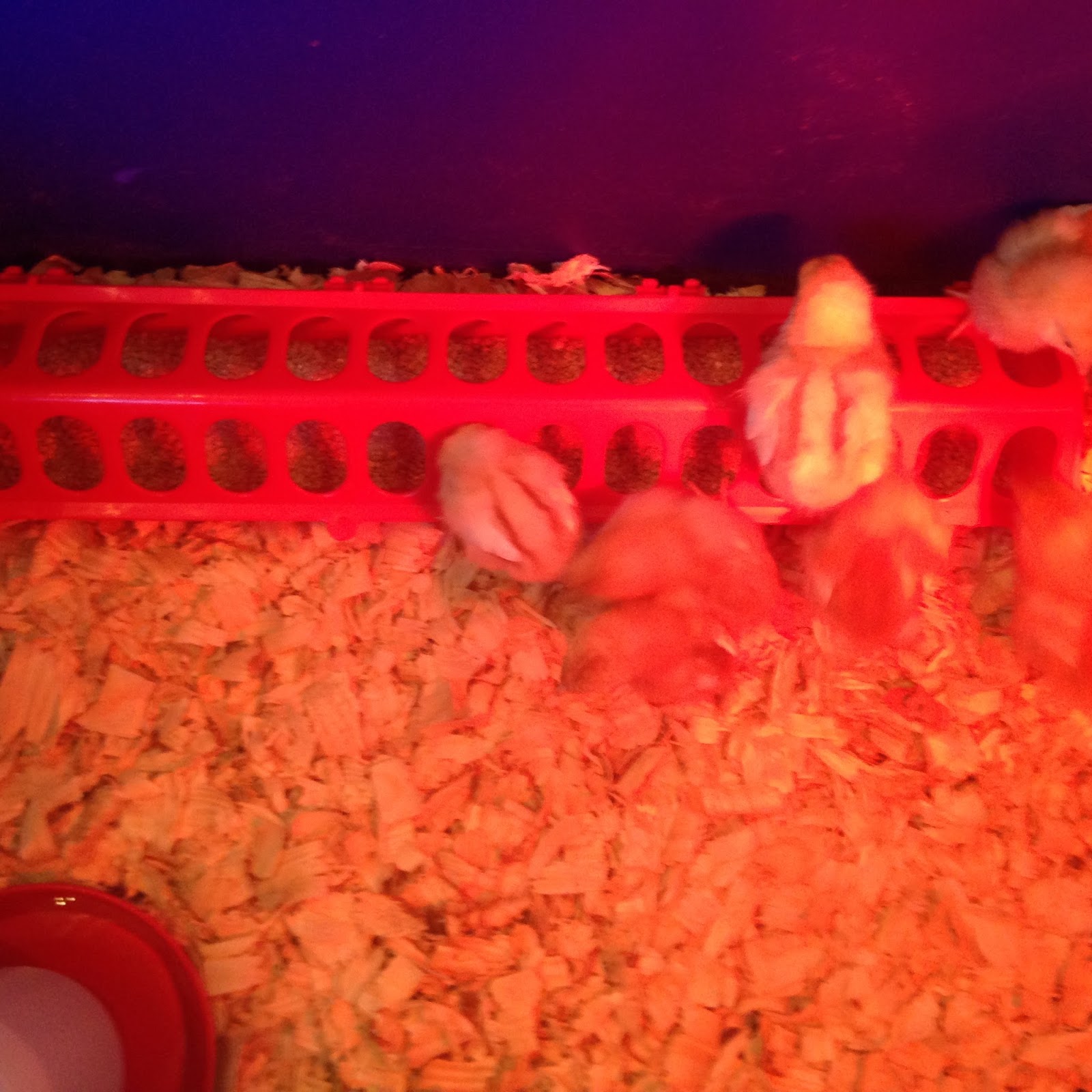
We just purchased 8 new pullets to replace what was left of our aging flock of Ameraucanas. The new additions to our household has also brought a great deal of joy to our family.

Right now they are pretty content.


Monday, January 18, 2016

Prepper's World Summit

I just wanted to make everyone aware of the Prepper's World Summit that is going on right now. Unfortunately, I've missed a few days, but it goes on until the 20th. the following text is from their website...
 
Natural disasters, terrorist attacks, rogue governments, economic collapse, medical emergencies, martial law, home invasions, no matter what the emergency is, natural or man made, long term or short, they can all strike with deadly force, at any time, anywhere, without warning.

What are you doing to prepare? Do you know what to do during and after disaster? ​Will you survive?

 You can register and watch it for free at http://www.prepperworldsummit.com